Misdelivered and Miscalculated
There have been some setbacks, nothing major but still very annoying.
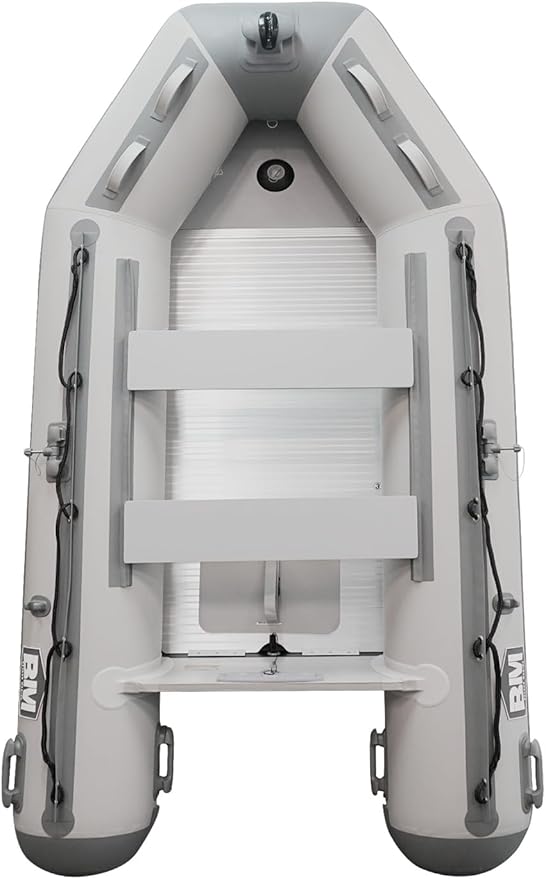
Not one, not two, not three but four consecutive deliveries from the online marketplace owned by Jeff didn’t make it. Now, this isn’t the marketplace’s fault, three different shipping companies screwed up. I received refunds for the first three deliveries. The fourth delivery is for a dinghy that was “shipped” 13 days ago and yet the tracking number shows it hasn't been picked up. I can’t get a refund for another 5 days.
I’ve decided to order a similar dinghy and return whichever one arrives last. Otherwise I could end up without a dinghy until sometime in March.
Three critical projects are underway and I can't leave the marina until they are completed.
The first is the redesign of the main salon. The new design features a seating area that converts into a bed for two, as well as space for a dedicated navigation station / desk (which houses the new electrical and computer systems underneath it). The old design was simply a wrap-around bench.
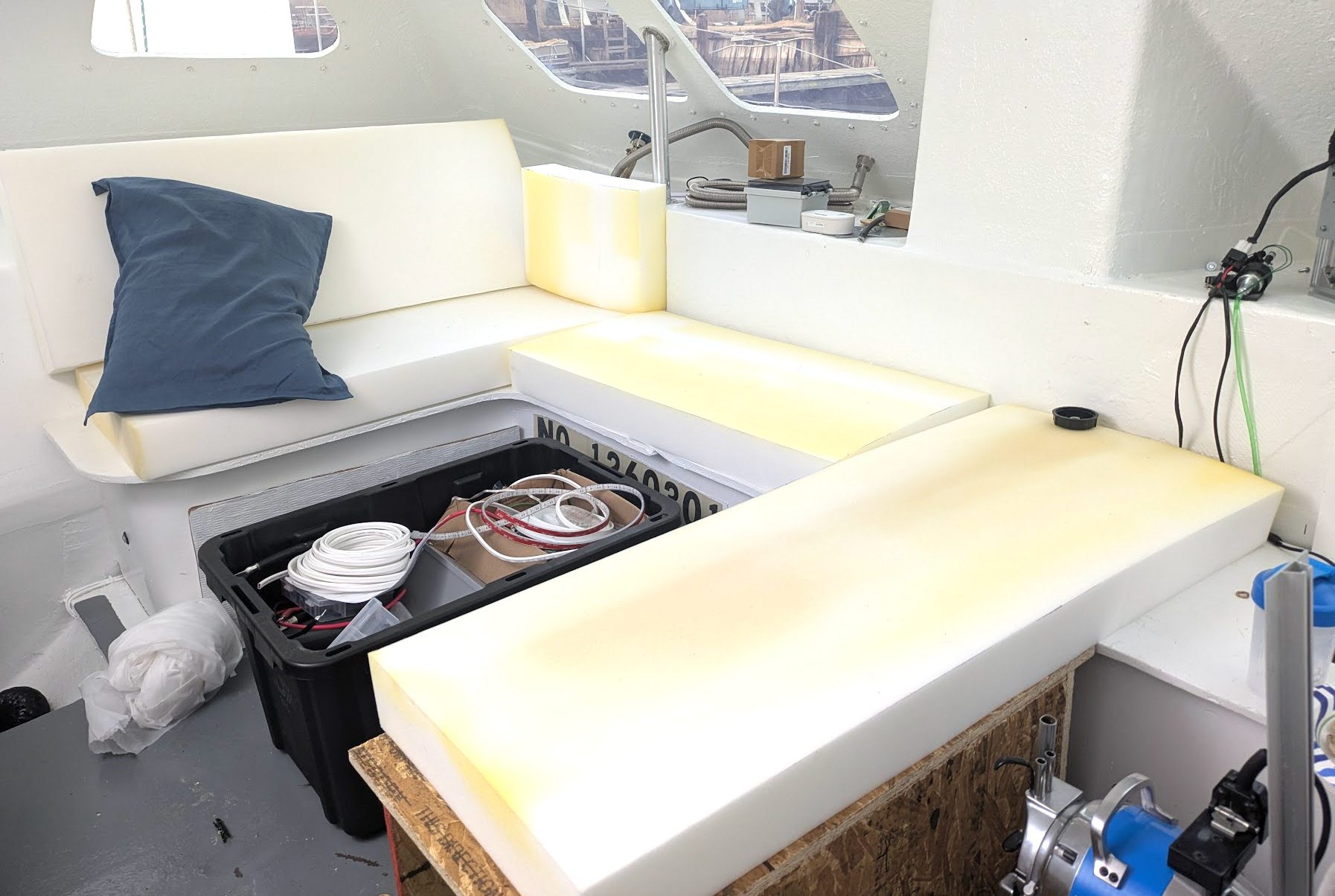
I LOLed while watching a sailing channel on Youtube earlier today. The talking head described a $1.5M catamaran as ‘Not a stripped down performance cat pretending to be a cruiser’. I felt seen (mocked?) - and evidently I’m not alone in doing this.
Also, I don’t have $1.5M for a boat. Zeesh folks, find a charity. Meanwhile I’m going to do my best to make her not-so-stripped-down.
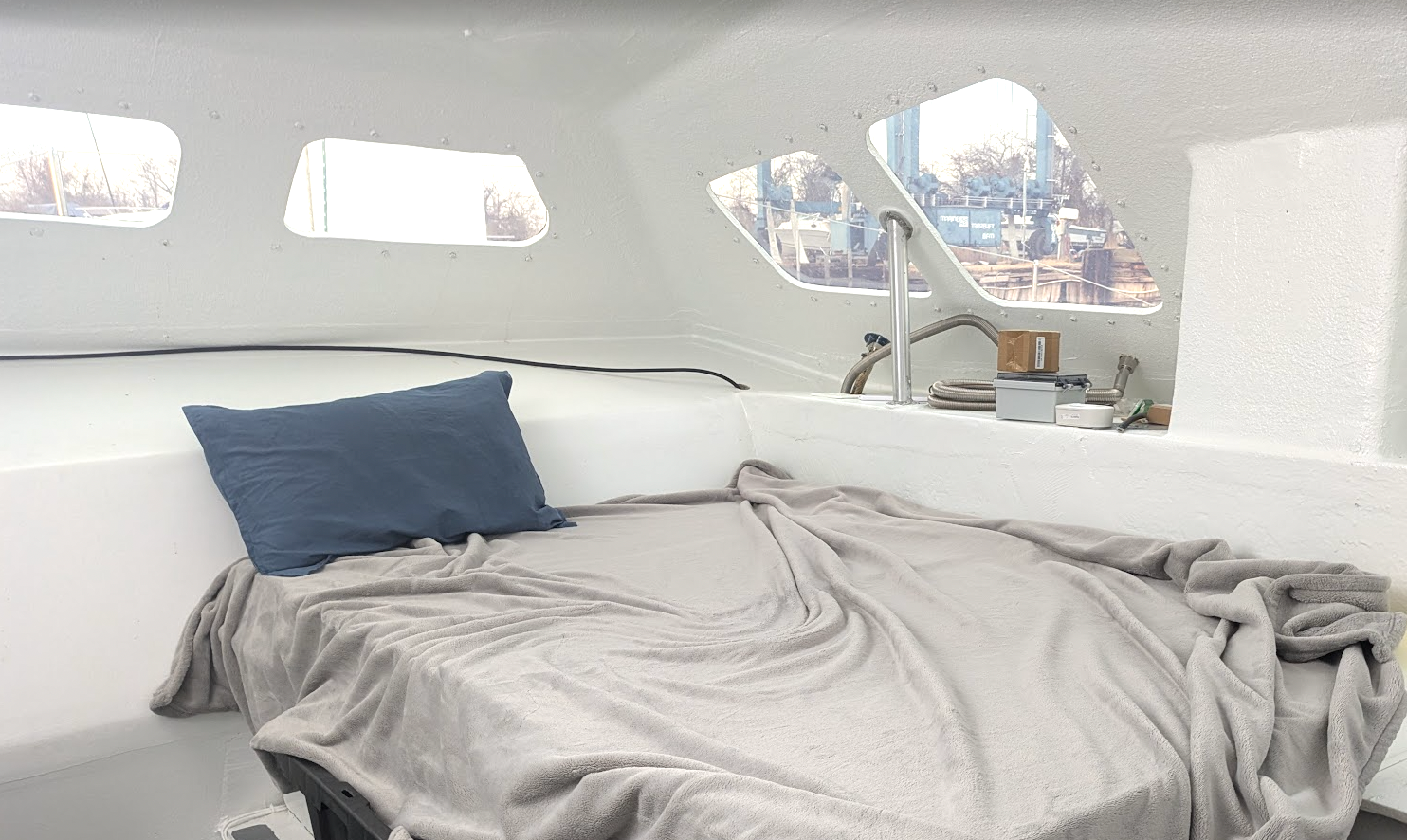
Like nearly everything else on a sailboat the nav station has several jobs. It is a desk with ample space for laptops. It is a control panel, with a full set of instruments (a touchscreen incorporating energy management, weather, and ship’s systems). It is also an enclosure. The modernized electronics and battery banks will be housed within the voids, but everything must be accessible for inspection and maintenance.
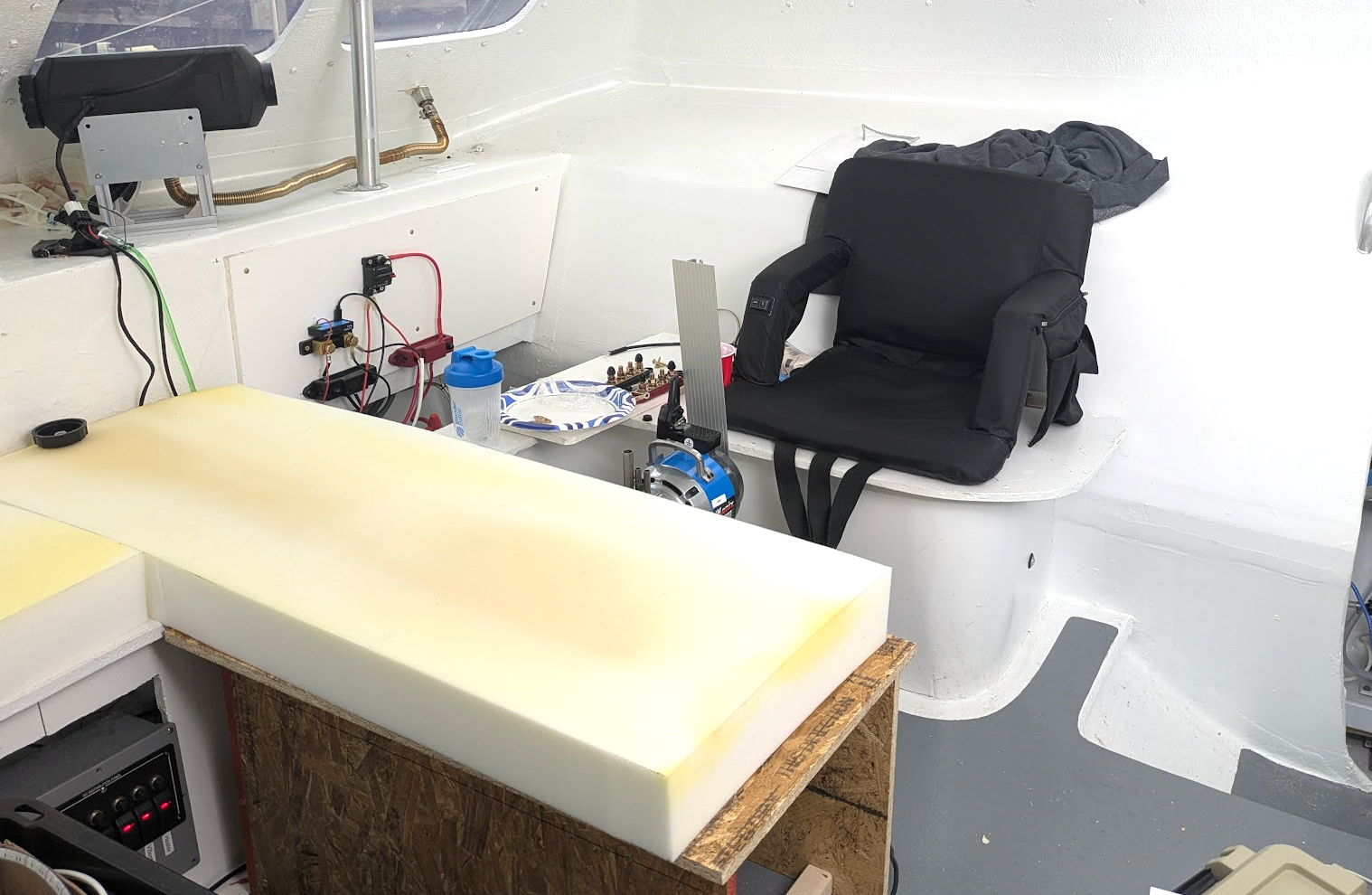
Once I’m happy with the layout / proportions of the desk then I get to finish the entire salon. First, the new cabinetry needs to be attached. I can’t penetrate the deck and most of the bulkheads with screws, so epoxy adhesives and fiberglass are the only way.
Once everything is attached, I’ll encase the new woodwork in a layer of fiberglass. Then epoxy based paints, and finally the part I’m most excited about; custom upholstery. The goal is to have everything attached and glassed in within a month. The finishing touches will happen much later, after I'm at anchor.
One setback that I’m trying to decide how to approach concerns the battery bank. After weeks of research and teardowns I selected a well regarded and long-standing brand of battery. The batteries are 12v and 314Ah using the super stable LIFEPO4 battery chemistry. I ordered a pair of them, with the intent of ordering two more once I fitted them and felt confident about their performance. I thought about supply chain risks, but assessed the risks to be low based on the product’s reputation and popularity. A mitigating factor was the short window of risk, about a week.
They arrived a week ago and I’m very pleased with them. So of course they were discontinued and sold out while I was evaluating them. With these batteries you must build a battery bank using identical batteries.
I double checked my math, and the two batteries in my battery bank will only provide about three days worth of energy. Given that solar is my primary source of power I need enough capacity to outlast any cloudy periods and I have to do so assuming the dead of winter with fewer than 6 hours of usable sunlight.
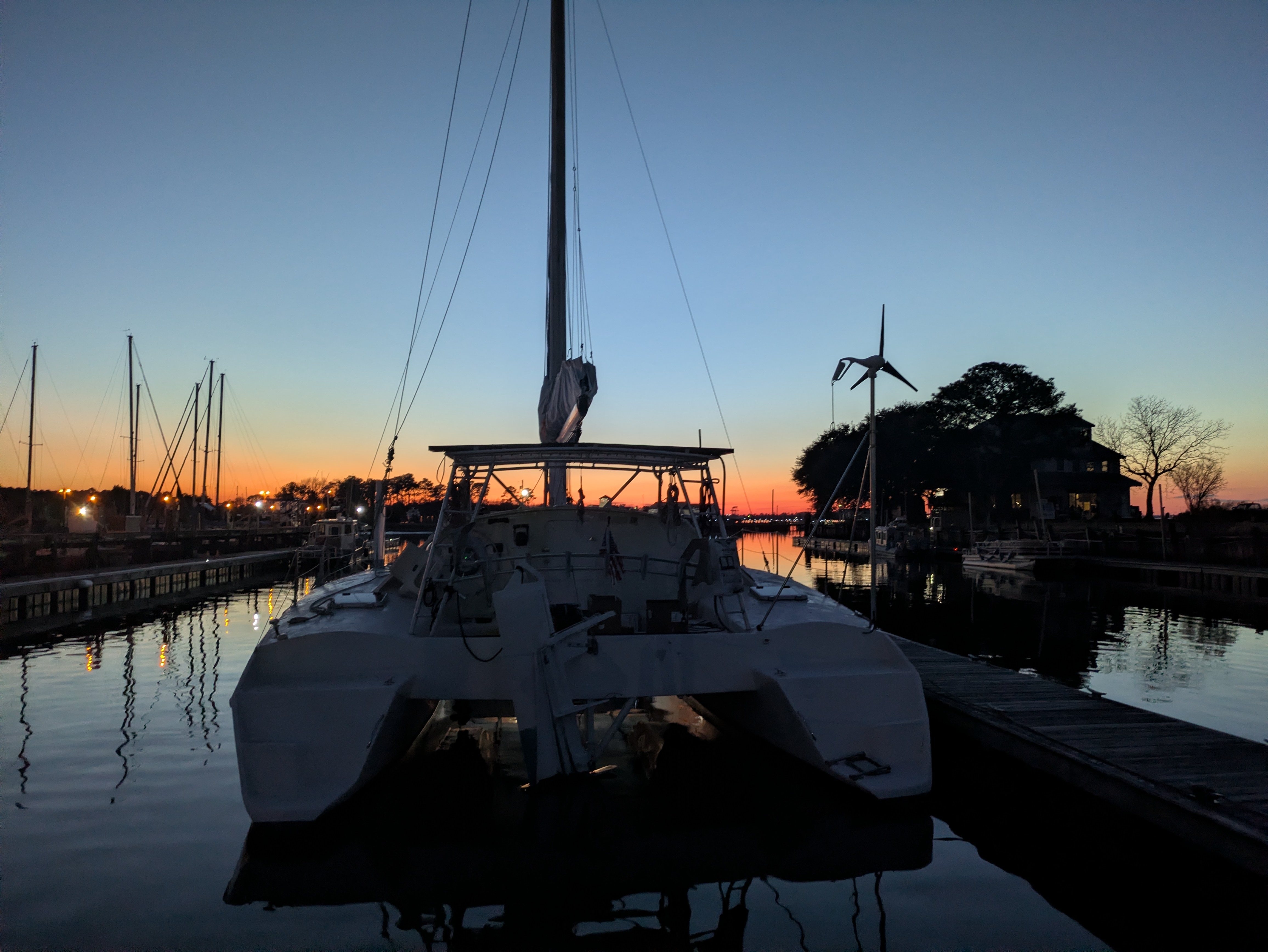
I need to harvest and/or store more electrons somehow.
I don’t really have any good choices. Although I’ve only had the batteries for eight days, and I like them, one option is to return them and source an alternative.
Another option is install a small generator. I hate the idea of the fumes and the noise. However, having a second power source is pragmatic. Even so, I mega-loath this approach overall.
Finally I can rethink my approach to solar. With enough panels, even on the darkest of days, I could keep the batteries topped off. Then the capacity of the battery bank would matter much less. Harvesting more photons isn’t even that expensive, however where do I put a kilowatt (That's around 60 square feet.) worth of solar panels?
Although F&P is a large vessel most flat areas already have a job. Every rope and every fitting requires ready access in the worst of conditions. This means ample paths, clear of obstructions for crew and their safety tethers to navigate.
One attractive option is to place pivoting panels along the lifelines. This approach keeps the panels off the decks while underway, and allows the panels to be angled toward the sun when at anchor.
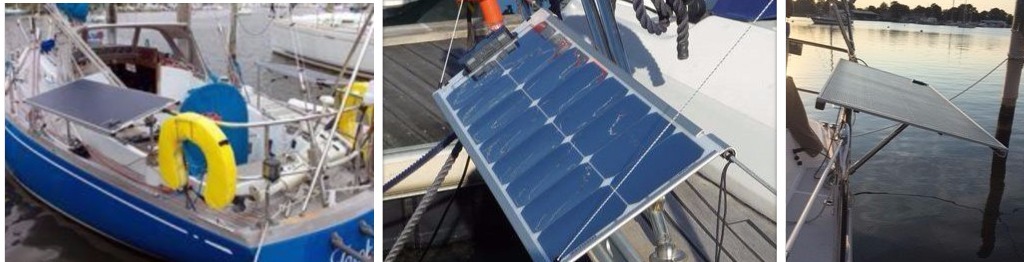
But where to place the wire conduits? Where to penetrate the deck with electrical fittings? How to route the conduits inside of the hull, in the living space? How to break everything down for storage below during a storm? How to protect the panels from clumsy humans?
Here is why I'm obsessing over energy management. Living on a Boat Off Grid
The other leading option is to build an aft solar arch / dinghy davit. This is likely the long term solution, but too ambitious in the few weeks before I intend to set sail.
Anyhow, energy storage / production is the second thing I have to sort out before leaving the marina.
The rope that snapped a week ago in the sleet storm will cost $200.00 - $300.00 to replace with 175' of 3/8 dyneema. Why so much? The mast is 60' tall, so a round trip requires 120' of line, plus this rope must snake back to the cockpit. All of the other ropes appear to be about the same age and many are longer in length. Inspecting and ensuring the rigging is ship-shape is the third project.
Another fun fact. There are less than obvious (by me at least) challenges of a mast that stands 70’ above the waterline. I am limited in a way I haven't been before. Most coastal bridges along the east coast are designed to handle 65’ tall vessels. This height was chosen to accommodate most sailboats - but not F&P.
This has a ramification that can be quite serious. In the past, when a hurricane approaches, I have always planned to sail up a river to avoid the brunt of it. Most rivers are blocked by bridges.
I’ve read, and dismissed, a storm strategy of outrunning storms. I'm starting to see the attraction and necessity. Set the sails and get the hell out of the way has benefits. For must boats with a top speed of around 10 knots, this isn't even an option. But, F&P is a fast boat having reached 18 knots on occasion. Still, charging up to Nova Scotia and ducking into the gulf of Saint Lawrence with a hurricane nipping at my heels seems unrealistic.
A new item for the todo list: I need to pre-plan escape routes with large rivers and tall bridges.
To recap: The dinghy is delayed, my batteries are discontinued, the salon resembles a partially built lego set, my solar plan may be insufficient, the bridges are short, the mast is tall, and storms happen.
#boatlife